
One in three employees in Germany is currently thinking about changing jobs. Most of them look outward. But sometimes change begins exactly where you already are, if you allow it. And if someone makes it possible.
Mathias Wohllaib had already started looking for other jobs. It was 2020, during the first months of the COVID-19 pandemic; his team was in the middle of a restructuring, close colleagues had left—and Mathias was even considering quitting his job.
Two years earlier, he had left a trade show construction company in Munich, moved back to his native South Baden, and joined the brand management team for our Haufe Akademie brand. “I wanted to move more into marketing, and I also found Haufe Group as a corporate group exciting,” says the 37-year-old. For three years, he managed trade show appearances and developed brand materials. “I enjoyed it and learned a lot.”
Then the pandemic changed everything, almost overnight. “That took a toll on everyone's mood, of course.” Internal restructuring followed, responsibilities shifted, colleagues started leaving, and Mathias began to feel it too: I want something different. “I had already started browsing job listings,” he says. But then another possibility opened up.
A conversation in the courtyard
He still remembers that it was a warm summer day when he ran into Stefan Kieslich, Head of Corporate Purchasing Operations at Haufe Group, in the campus courtyard. They had already worked closely together at that time. Mathias remembers the moment clearly: “Suddenly Stefan said to me he had another topic. My first thought was that he was bringing up a problem, that something had gone wrong in the last project,” he says, laughing. Instead, Stefan told him he was rebuilding his events team and could easily imagine Mathias in a team-lead role. “Mathias brought expertise in marketing and trade-show construction, plus digital know-how, and given COVID, that last part was a decisive skill in the events space. I had also seen him stay clear-headed under pressure in joint projects. For me, he was an obvious candidate,” Stefan says today.
Mathias was surprised, pleased—yet he hesitated. The role would be a major step: away from brand-specific marketing and into a leadership position with an events focus, responsibility for all Haufe Group brands, and plenty of room to shape things. “I thought about it very carefully and had a lot of conversations,” he says. In the end, one thought made the difference: “I knew I wanted a change.” At the same time, he didn't want to leave Haufe Group. “To me, we're a company group that's well known far beyond Freiburg, with strong brands and products I'm proud of. At the same time, I have a work environment here that gives me a lot of flexibility and where I genuinely feel at home.” So he went through the multi-stage application process—and started as Team Lead of Fairs & Events in November 2020.
20 percent of all hires are internal moves
Mathias Wohllaib is one of many colleagues who take the opportunity to reinvent themselves from within. Internal mobility currently accounts for 20 percent of all hires at Haufe Group, making it the strongest recruiting channel. “As a company group with diverse areas of work and major brands serving completely different markets and customers, our employees can develop in very different directions,” says Camilla Iber from HR. “We also look at where people's strengths lie and where they can make the most of their skills.”
Haufe Group expects its employees to keep growing, expand their skills, and engage with changing requirements. That keeps teams dynamic and the company capable of innovation. There are numerous resources to support this, from internal and external training and seminars to e-learning, assessments, and coaching.
“Supporting development also means taking seriously what it produces. ”
Encouraging that and supporting development also means taking seriously what it produces. “Colleagues come to us with all kinds of things, including a concrete wish for change,” says Julia Hindorf from the HR Learning & Development team, which supports professional development across Haufe Group. The scenario that someone wants to leave their current role but not the company repeatedly comes up regularly in these consultations. “That's not a red flag for us. It shows that someone reflects on their own contribution and questions whether they're still making the most impact in that position with their strengths. That's exactly what we want,” Julia says.
She then works with the person to figure out what's really going on: more of something? less of something? moving toward something? “We also manage expectations. Not every wish can be fulfilled internally, and individual goals have to align with where Haufe Group is heading and what it needs.” What matters to her is helping those colleagues make a conscious, deliberate decision. “Someone who's unhappy in their seat can never bring their full potential to the company.” Sometimes the result is simply a good conversation with their own manager, a chance to jointly reshape the existing role so the person can be fully effective again right where they are.
Why internal mobility pays off
A look at the job market shows why this approach matters. According to a Forsa survey commissioned by Xing, one in three working people in Germany is currently considering a job change. At the same time, the Gallup Engagement Index 2025 shows that emotional attachment to employers has hit an all-time low. The reasons: lack of career prospects and poor leadership.
“You brought these people in because you believed in what they could do. ”
Matthias Haller, editor-in-chief of personalmagazin published by Haufe, sees internal moves as a natural extension of good recruiting: “You brought these people in because you believed in what they could do.” For the employer, it also makes straightforward practical sense. Knowledge, networks, and an understanding of internal processes stay within the organization, rather than walking out the door to a competitor. Especially in industries or regions where skilled professionals are hard to find, well-managed internal moves are an important part of HR work. “Companies that give employees room to grow build loyalty among skilled professionals. That's especially valuable for family-owned businesses like Haufe Group, which focus on long-term business development.”
The first year—rocky, but formative
That first year was challenging for Mathias. The team needed to find its footing, roles needed to be defined—and no one knew how the pandemic would unfold. “I really grew that year,” Mathias says. “Both professionally and as a leader.” His manager gave him the freedom to make decisions, and Mathias used it. He brought new skills into the team and significantly expanded its range of work. Today, his team is responsible for the entire events landscape of Haufe Group and its brands.

In hindsight, Mathias is very glad he stayed. “Even though my previous position had eventually wasn’t the right fit for me, I valued Haufe Group as an employer, and I'm glad I was given and took this internal opportunity.” Stefan, too, has had many positive experiences with internal moves during his more than 25 years as a manager at Haufe Group. His principle: “An internal move should first and foremost be seen and respected as an opportunity for the employee and their development. And for the company, it's always better to keep good people in-house.”
Working at Haufe Group—an experience that continues
Mathias has by now seen internal moves from both sides: Colleagues from his team have moved to other parts of Haufe Group, and others have come to him from there. He doesn't see that as a loss. When someone from his team approaches him about a potential move, he neither tries to persuade them to stay nor to hold them back. “I stay out of it at first. That’s a decision each person has to make for themselves—not for me and not against me.” Once the decision is made, he encourages and supports them. Start dates, handovers, and open projects are worked out in dialogue with both the former and the new manager. The goal is a transition that runs smoothly for everyone involved—for the person leaving, for the team they leave behind, and for the team they join.
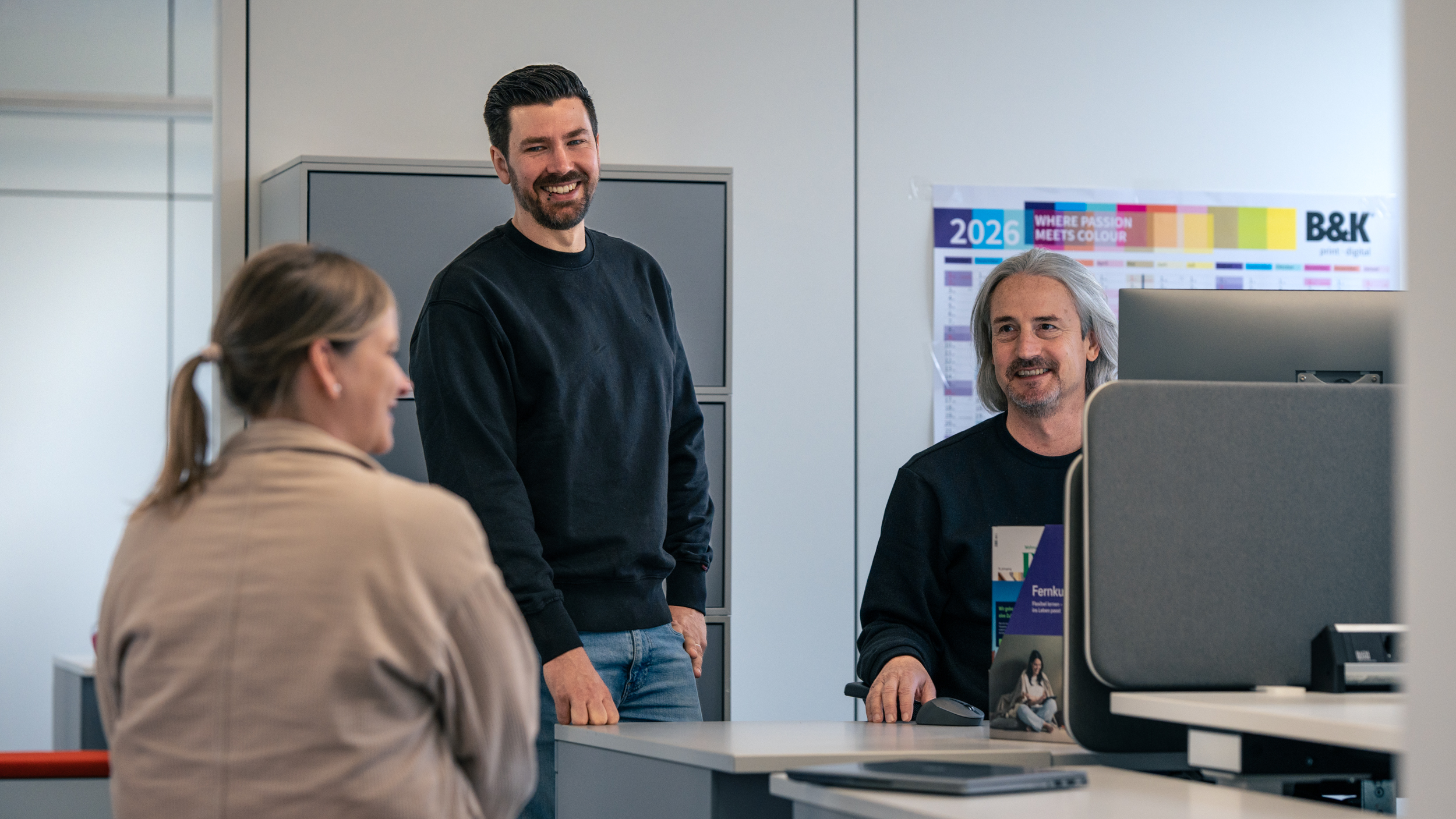
When Mathias looks around his office today, he sees a team that didn't exist like this five years ago. Many members came from other parts of Haufe Group and bring different experiences. None of them left the company. But all of them started something new.