
Climate action
On the path to climate neutrality
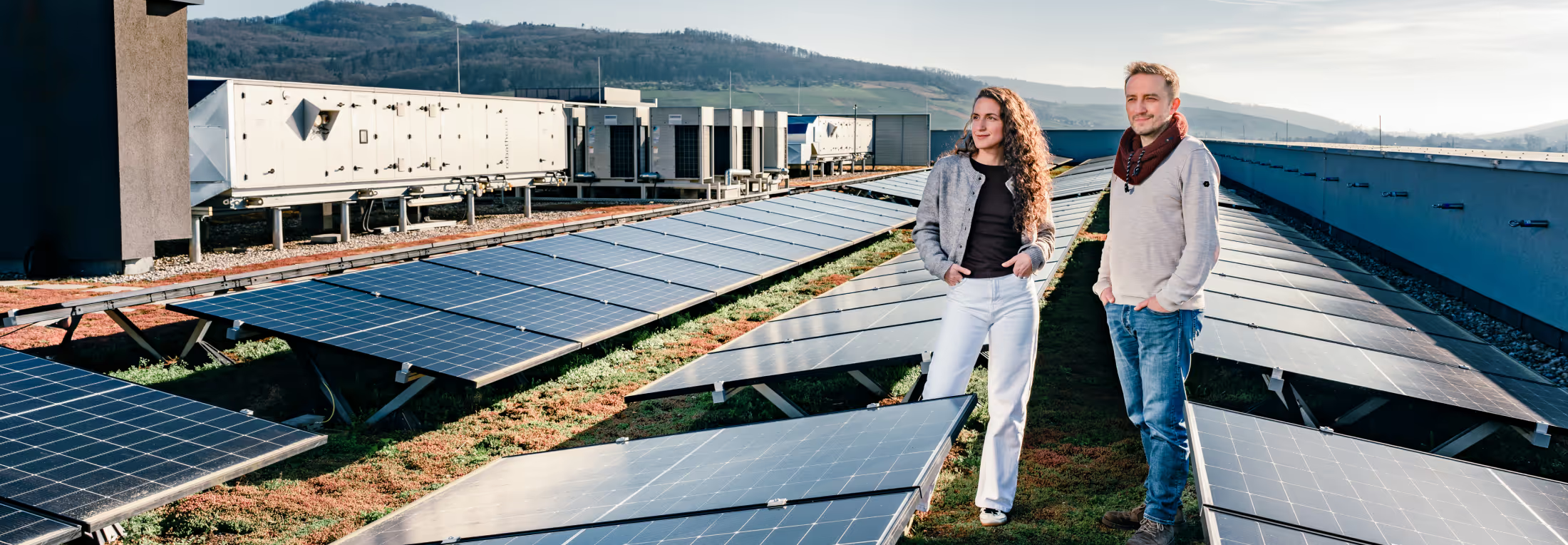

We consistently reduce our emissions.
This is how we contribute to creating a climate-neutral future.
Climate change is one of the greatest challenges of our time. However, we also generate emissions – for example through the commuting of our employees or via energy consumption at our locations.
This is why we remain committed on our path toward climate neutrality. Our objective is to be climate-neutral by 2045. In this we are guided by one of the most stringent global standards: The Net-Zero Standard of the SBTi (Science Based Targets initiative). Our approach: Prioritize avoiding and reducing emissions. Step by step, with measurable targets and clear actions. For us, offsetting is only an option for unavoidable residual emissions.
Our footprint:
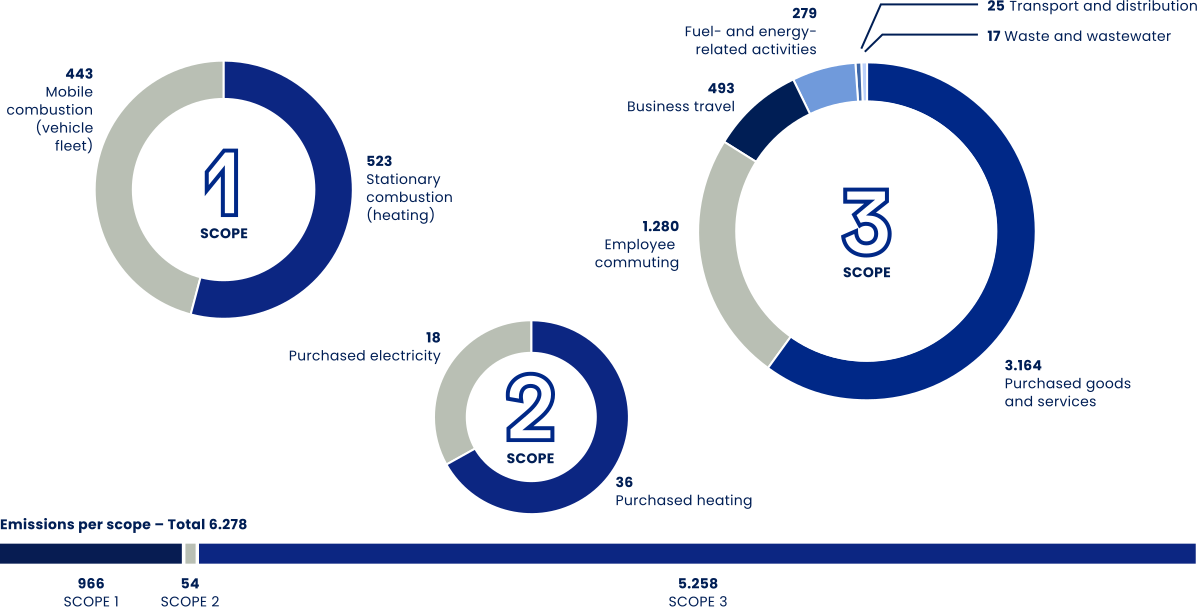
Where our emissions come from
To specifically reduce our emissions we regularly analyze our corporate carbon footprint (CCF). It shows where emissions arise throughout our business operations, both directly and indirectly, and where we need to focus our efforts to effectively reduce them. As a part of this, we distinguish between three areas:
Direct emissions from our own facilities, for example our vehicle fleet and the heating systems at our sites.
Indirect emissions from purchased energy, e.g. electricity and district heating at our sites.
Indirect emissions along our value chain, such as those resulting from purchased goods and services, business travel and the commuting of our employees.
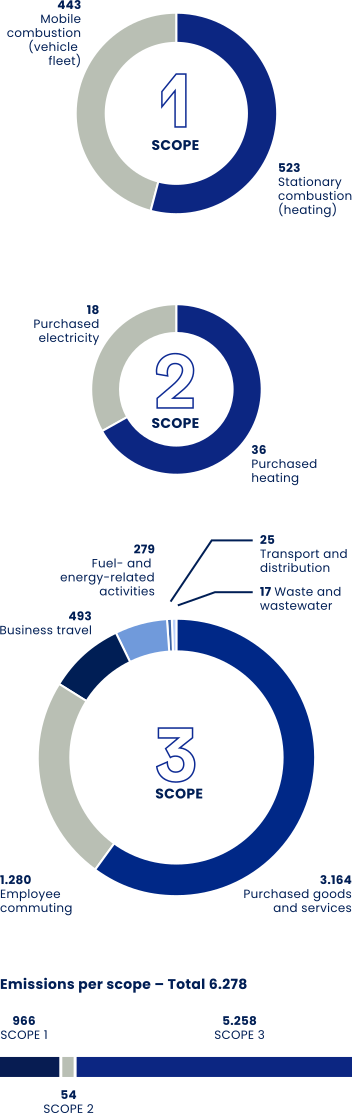
The corporate carbon footprint of Haufe Group for the fiscal year 2025
What have we achieved so far?
From our base year 2019 to the 2025 fiscal year we have been able to reduce our total emissions by approximately 34% while achieving 38% revenue growth over the same period. This shows that our measures are having an impact.

How we continue to reduce our footprint
Our path to net zero indicates the direction we are heading in and how we plan to achieve this target. It describes how we are reducing our emissions in line with the 1.5-degree objective, with clearly defined reduction paths for Scope 1, Scope 2 and Scope 3.

Interested in learning more?
Mobility:
Many paths, one common target

Damit wir dort ansetzen, wo unsere größten Hebel liegen, nutzen wir die Wesentlichkeitsanalyse. Sie hilft uns zu verstehen, welche Nachhaltigkeitsthemen für die Haufe Group besonders wichtig sind und wo unser Handeln die größte Wirkung hat – für Umwelt,
Menschen und die Gesellschaft. Auf dieser Grundlage richten wir unsere Nachhaltigkeitsstrategie aus.Das Ergebnis der Wesentlichkeitsanalyse zeigt, welche Nachhaltigkeitsthemen für uns im Fokus stehen:
Workplace mobility is different for each of us, and at around 39% it accounts for the largest share of our CO₂e footprint. This is why we are creating a wide range of options for more sustainable travel.
We are electrifying our vehicle fleet and are also providing numerous charging stations for electric vehicles across our Freiburg campus. Employees who prefer to get around on two wheels can take advantage of our corporate bike leasing program and use the repair and charging stations on campus. We also support commuting by providing a subsidy for public transportation tickets. This creates mobility services that take different needs into account and make it easier for employees to travel more sustainably and with lower emissions in their daily routines.

We are electrifying our vehicle fleet and are also providing numerous charging stations for electric vehicles across our Freiburg campus. Employees who prefer to get around on two wheels can take advantage of our corporate bike leasing program and use the repair and charging stations on campus. We also support commuting by providing a subsidy for public transportation tickets. This creates mobility services that take different needs into account and make it easier for employees to travel more sustainably and with lower emissions in their daily routines.
Our work environments: Good for the environment, good for the people

Damit wir dort ansetzen, wo unsere größten Hebel liegen, nutzen wir die Wesentlichkeitsanalyse. Sie hilft uns zu verstehen, welche Nachhaltigkeitsthemen für die Haufe Group besonders wichtig sind und wo unser Handeln die größte Wirkung hat – für Umwelt,
Menschen und die Gesellschaft. Auf dieser Grundlage richten wir unsere Nachhaltigkeitsstrategie aus.Das Ergebnis der Wesentlichkeitsanalyse zeigt, welche Nachhaltigkeitsthemen für uns im Fokus stehen:
Our buildings make an important contribution to achieving our sustainability targets. This is not just about using resources responsibly: We aim to create work environments that promote a modern work culture and provide good working conditions for our employees.
Our newest “Building 6” on the Freiburg campus is a prime example of the importance of holistic, sustainable construction to us: energy-efficient construction, sustainable materials, and workspaces that support collaboration, communication and focused work to equal extents.

Damit wir dort ansetzen, wo unsere größten Hebel liegen, nutzen wir die Wesentlichkeitsanalyse. Sie hilft uns zu verstehen, welche Nachhaltigkeitsthemen für die Haufe Group besonders wichtig sind und wo unser Handeln die größte Wirkung hat – für Umwelt,
Menschen und die Gesellschaft. Auf dieser Grundlage richten wir unsere Nachhaltigkeitsstrategie aus.Das Ergebnis der Wesentlichkeitsanalyse zeigt, welche Nachhaltigkeitsthemen für uns im Fokus stehen:
.avif)
Further topics

Sustainability strategy

Social responsibility

Digital responsibility